
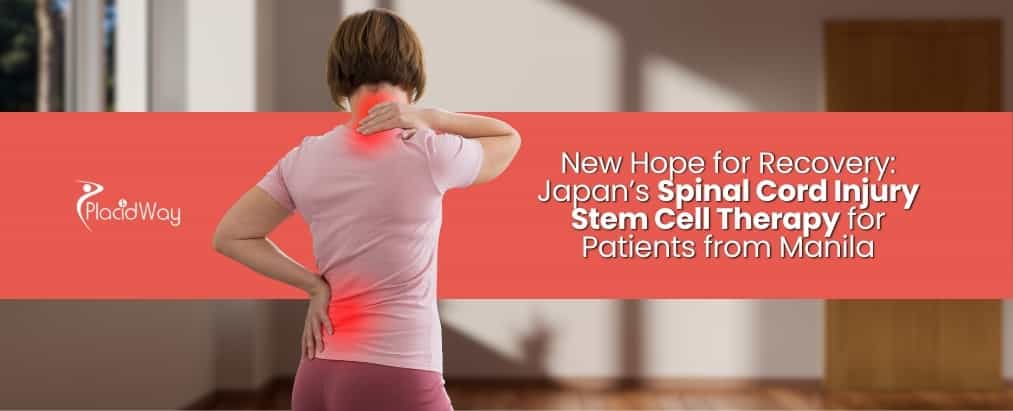
For patients in Manila living with the long-term effects of spinal cord injury, Japan is offering renewed hope through advanced regenerative solutions. Japan’s spinal cord injury stem cell therapy is designed to support neural repair, reduce inflammation, and potentially improve mobility and sensory function where conventional rehabilitation has reached its limits.
With world-class medical technology, highly specialized clinicians, and strict safety standards, Japan has become a leading destination for those seeking measurable progress and a better quality of life after spinal cord damage.
Key Takeaways
-
Safety & Regulation: Japan offers the highest level of regulatory safety globally via the Act on the Safety of Regenerative Medicine (ASRM), ensuring all cell processing and clinical protocols for Spinal Cord Injury (SCI) are government-vetted.
-
Cost & Value: A comprehensive SCI treatment package in Japan typically ranges from $20,000 – $45,000 USD (approx. ?1.1 Million – ?2.5 Million PHP), reflecting the high cost of specialized neuro-regeneration and monitoring.
-
Treatment Focus: The therapy targets functional recovery in patients with chronic SCI by reducing the glial scar, promoting neuroprotection, and supporting neuroplasticity.
-
Cell Potency: Japanese clinics provide culture-expanded (high-dose) Autologous or Allogeneic MSCs, often utilizing specialized neural progenitor cells (like MUSE cells) derived from adult sources for CNS repair.
-
Logistics: Philippine citizens require a specific Medical Stay Visa for the two-visit protocol, which top Japanese hospitals routinely assist with.
What is Stem Cell Therapy for Spinal Cord Injury (SCI)?
Stem cell therapy for SCI is a regenerative approach that focuses on promoting nerve survival and functional reconnection in the damaged spinal cord tissue.
Spinal Cord Injury results in permanent functional loss (paralysis, loss of sensation, loss of autonomic control) primarily because the dense, hard scar tissue (glial scar) prevents nerve regrowth. Regenerative medicine aims to mitigate this secondary damage.
The Regenerative Mechanism
-
Anti-Scarring and Protection: Mesenchymal Stem Cells (MSCs) are infused to release anti-inflammatory and anti-fibrotic factors that break down the glial scar tissue, creating a permissive environment for axonal regeneration.
-
Neuroprotection: The cells release potent neurotrophic factors that shield remaining neurons from secondary cell death.
-
Functional Improvement: The goal is to improve function in the chronic phase (typically 6 months or more post-injury) where natural recovery has plateaued, focusing on gains in motor function, sensation, and bladder/bowel control.
Why Japan? Safety and Neuro-Expertise
Japan is a global leader in regenerative neurology, driven by the Nobel Prize-winning work in stem cell science. For Filipino patients, Japan offers critical advantages over many lower-cost alternatives.
1. Regulatory Gold Standard (ASRM)
The Act on the Safety of Regenerative Medicine (ASRM) mandates that all stem cell collection, culturing (expansion), and administration protocols are reviewed and registered with the Ministry of Health, Labour and Welfare (MHLW). This level of oversight is vital for complex CNS treatments.
2. High-Dose Cultured Cells
The required cell culturing process (growing the patient's cells in a lab for several weeks) ensures that 100 million to 300 million highly viable MSCs can be administered. This high dosage is considered essential for effective CNS penetration and regeneration.
3. Integrated Robotics
Japan is home to advanced neuro-rehabilitation technology, including wearable robotics (like the HAL exoskeleton). Stem cell infusion often works synergistically with this intensive rehabilitation to maximize the functional gains in mobility.
The Treatment Protocol: A Two-Visit Plan
Due to the rigorous cell expansion phase, the treatment requires two trips from Manila to Japan, typically separated by 4–6 weeks.
Visit 1: Harvesting and Initial Assessment (2–3 Days)
-
Pre-Screening: Japanese neurologists review Filipino medical records (MRI/CT scans, neurological assessment—e.g., ASIA scores) to confirm eligibility.
-
Arrival in Japan: Final assessment and physical examination.
-
Harvesting: A mini-liposuction (fat tissue) or bone marrow aspiration is performed to collect the autologous cells.
-
Departure: The patient returns to Manila while the cells are cultured in the Japanese CPC (Certified Cell Processing Center).
Visit 2: Infusion and Rehabilitation (3–5 Days)
-
Return to Japan: Fly back for the administration.
-
Administration: The high-dose MSC solution is delivered via Intravenous (IV) Infusion and/or Intrathecal Injection (lumbar puncture) to target the CNS effectively.
-
Rehabilitation: Initial specialized physiotherapy sessions are conducted to activate the newly infused cells and begin neuro-rehabilitation.
Cost Comparison and Financial Planning
The cost reflects the premium price of regulated, highly specialized neurological care.
Understanding the cost of spinal cord injury stem cell in Japan is an important step for patients from Manila who are considering treatment abroad.
|
Destination |
Procedure (Complex Neurological SCI) |
Est. Cost (USD) |
Est. Cost (PHP) |
Regulatory Standard |
|---|---|---|---|---|
|
Japan |
Cultured MSC IV/Intrathecal |
$20,000 – $45,000 |
?1.1M – ?2.5M |
ASRM/MHLW (Highest Safety) |
|
Philippines |
Localized Trial / Low Dose |
Varies (High cost locally) |
?500K – ?1.5M |
Limited access, experimental. |
|
Thailand |
Allogeneic MSCs + Rehab |
$15,000 – $30,000 |
?840K – ?1.7M |
Highly competitive regional option. |
Travel Logistics for Filipino Patients
1. Medical Stay Visa (MTS)
Filipino citizens are not eligible for visa-free entry to Japan and must obtain a Medical Stay Visa (MTS).
-
Key Requirement: A Certificate of Planned Medical Visits and a Letter of Guarantee from a Japanese medical coordinator/guarantor.
-
Support: Reputable clinics assist with securing these required documents for the application at the Japanese Embassy in Manila.
2. Flights and Travel
-
Direct Flights: Available from Manila (MNL) to Tokyo (NRT/HND) (Philippine Airlines, ANA, JAL). Flight time is approximately 4.5 hours.
-
Attendant: Due to mobility issues, the patient will need an accompanying relative, who must also apply for a visa.
3. Payment
-
Insurance: Stem cell therapy is classified as investigational and is not covered by PhilHealth or standard private Philippine insurance. Patients must plan for this as a private, out-of-pocket expense.
Frequently Asked Questions (FAQ)
Is a full functional recovery guaranteed? No. While many patients report measurable gains (sensation returning, improved motor control, or better bladder/bowel function), full recovery is rare. The therapy is aimed at achieving the best possible functional improvement for the patient's quality of life.
How long do I need to stay in Japan for the two visits? The first visit (harvesting) is 2–3 days. The second visit (infusion and rehabilitation start) is usually 3–5 days.
What is the risk of the Intrathecal injection? The risk is low in accredited Japanese hospitals. The procedure is performed by trained specialists, and the primary side effect is often a temporary headache. The necessity of this route is to ensure the cells bypass the blood-brain barrier for maximum neurological effect.
Will the hospital staff speak Tagalog? While Japanese and English are primary, international clinics often have staff fluent in Mandarin and/or dedicated medical coordinators who can provide assistance in Tagalog or English.
Ready to Explore Advanced Neuro-Regeneration?
PlacidWay connects Manila patients with MHLW-approved neuro-regenerative specialists in Japan. We manage the complex logistics, documentation, and coordination necessary for a safe and effective treatment journey.
We assist with:
-
Visa Documentation: Securing the mandatory Invitation Letter and guarantee documents.
-
Specialist Matching: Finding Japanese neurologists experienced in chronic SCI regeneration.
-
Travel Coordination: Managing the two-visit protocol and local support in Tokyo or Osaka.









Share this listing